


Listrik Kita Indonesia is an official Schneider Electric distributor in Indonesia, providing a wide range of electrical products and solutions for residential, commercial, industrial, and project needs. Schneider Electric products available include Low Voltage (LV) and Medium Voltage (MV) solutions, such as MCBs, MCCBs, ACBs, contactors, protection devices, switchgear, and various other electrical equipment.
These products are available through ListrikKita.com, an electrical e-commerce platform serving customers across Indonesia.
Electric motors are used in many applications, from production machines and pumps to conveyors and HVAC systems. Since motors often operate continuously under changing loads, they need proper protection to maintain safe and reliable operation. One important component used for motor protection is the Thermal Overload Relay (TOR).
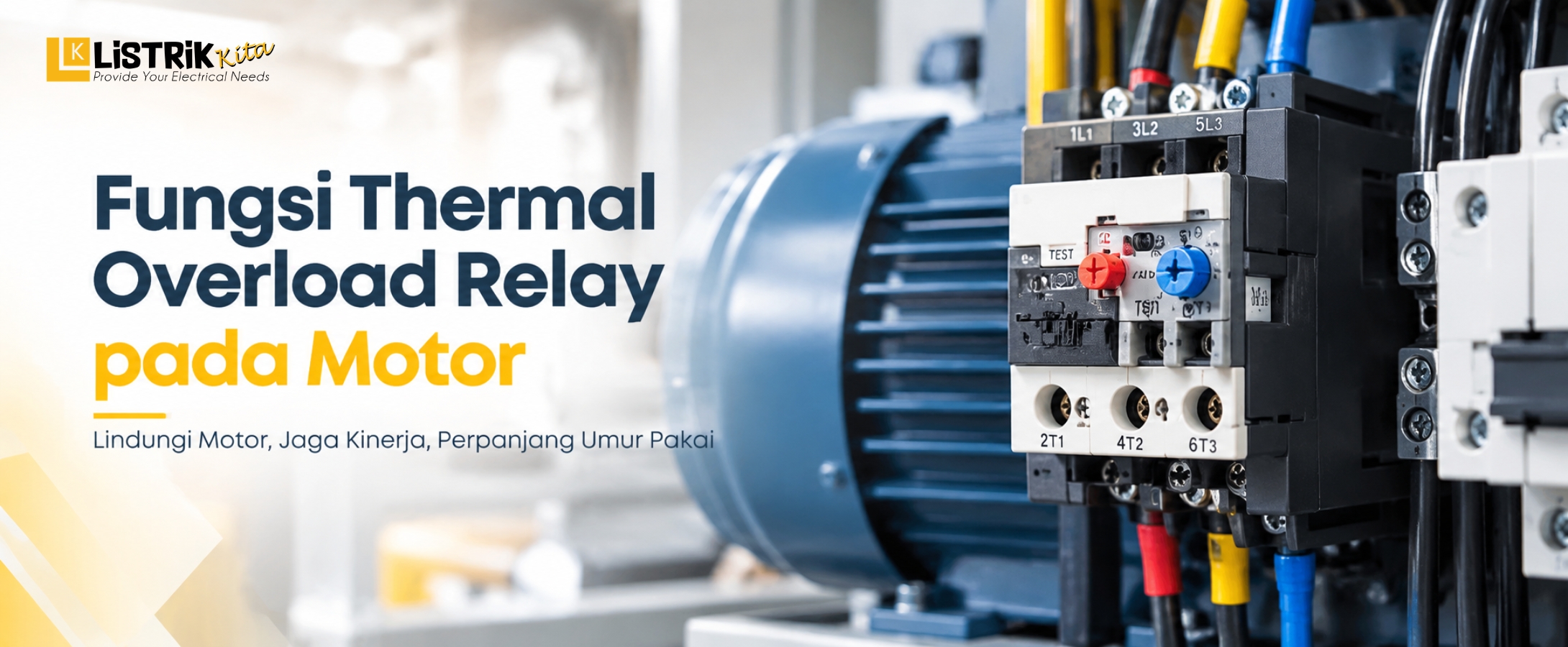
A Thermal Overload Relay is designed to protect an electric motor from overload conditions. When the motor draws more current than its normal operating level for a certain period, the TOR detects the condition and can interrupt the control circuit, causing the motor to stop. So, what are the main functions of a Thermal Overload Relay?
Main Functions of a Thermal Overload Relay for Motors
1. Protecting the Motor from Overload
One of the main functions of a Thermal Overload Relay is to protect the motor when an overload occurs. This condition happens when the motor draws more current than its normal operating value for a certain period.
Overload can be caused by several factors, such as excessive mechanical load, resistance in the motor shaft, or operating conditions that do not match the motor's specifications. If the condition continues, excessive current can cause the motor to heat up and potentially damage its internal components.
The TOR detects an increase in the current flowing to the motor. When the overload continues and reaches the set limit, the thermal element inside the relay responds and changes the position of its contacts. This change can stop the contactor and disconnect the electrical supply to the motor.
2. Preventing Excessive Motor Temperature
Excessive electrical current can generate too much heat inside a motor. If the temperature continues to rise, the winding insulation and other internal components may deteriorate or become damaged.
A Thermal Overload Relay helps prevent this condition by using the heating effect of electrical current. When the current exceeds the selected setting, the thermal element inside the TOR heats up.
If the heat reaches the trip limit, the TOR trips and stops the motor from operating. This helps reduce the possibility of the motor continuing to run under overheating conditions.
3. Reducing the Risk of Electrical Fires
An overload that is not handled properly can cause excessive heat in the motor and related parts of the electrical installation. Under certain conditions, excessive heat can increase the risk of component damage and even fire.
By interrupting the control circuit when an overload occurs, a Thermal Overload Relay helps reduce this risk. However, a TOR is not designed to protect against every type of electrical fault. Short circuits, for example, require suitable protection devices such as MCBs, MCCBs, or fuses.
For this reason, a TOR should be considered as part of a complete motor protection system.
4. Helping Extend Motor Life
A motor that frequently operates under overload conditions experiences greater thermal stress. Over time, this can accelerate the deterioration of the motor winding and other components.
A Thermal Overload Relay helps reduce this thermal stress by stopping the motor when an overload continues beyond the defined limit. This protection helps prevent the motor from continuously operating under conditions that could cause damage.
The TOR should also be selected according to the motor's rated current. Proper adjustment helps provide effective protection without causing unnecessary trips during normal operation.
5. Providing a Fault Signal
Besides providing protection, a Thermal Overload Relay can also help indicate when an overload has occurred. Some TOR models include auxiliary contacts that can be connected to a control circuit or indication system.
When the TOR trips, the change in contact position can be used to provide a fault signal. This information helps technicians identify that the motor has stopped because of an overload condition.
With a clear fault indication, troubleshooting and maintenance can be easier. Technicians can then check possible causes such as the motor load, mechanical condition, electrical connections, and protection settings.
How a Thermal Overload Relay Protects a Motor
What Happens When an Overload Occurs?
In simple terms, the Thermal Overload Relay starts working when the motor current rises above its normal operating level. The current produces heat in the TOR's thermal element. If the overload continues and reaches the trip limit, the relay mechanism operates.
The TOR then changes the position of its contacts in the control circuit. When connected to a contactor, this change can open the circuit and stop the motor.
After the cause of the overload has been identified and the system is safe, the TOR can be reset according to the device type and applicable operating procedure.
Difference Between Overload and Short Circuit Protection
A Thermal Overload Relay is mainly used to protect against overload conditions that continue for a certain period. A short circuit is a different type of electrical fault and requires a suitable protection device with the appropriate response.
Because these devices have different functions, a TOR is commonly used together with MCBs, MCCBs, or fuses. Using the right combination of protection devices can provide more complete protection for the motor and electrical installation.
Tips for Choosing the Right Thermal Overload Relay
Match the Motor's Rated Current
Choose a TOR with an adjustable current range that matches the motor's rated current. Do not select the device based only on its physical size or contactor type.
Check the Thermal Overload Relay Trip Class
The trip class determines how quickly the TOR responds to an overload condition. The appropriate class should be selected based on the motor characteristics and application requirements.
Make Sure It Is Compatible with the Contactor
For motor starter systems, make sure the Thermal Overload Relay is compatible with the contactor being used. Proper compatibility helps ensure that the control circuit and protection mechanism operate correctly.
Consider the Motor Application and Operating Conditions
The motor type, load, operating pattern, and environmental conditions should all be considered when selecting the right protection device. Proper selection can help the motor system operate more safely and reliably.
A Thermal Overload Relay is an important component in an electric motor protection system. From protecting against overload and helping prevent overheating to reducing heat-related damage and providing fault signals, a TOR helps keep motors operating more safely. If you are looking for an original Thermal Overload Relay, you can purchase it from Listrik Kita. Listrik Kita is an official Schneider Electric distributor that provides original and warranted products for various electrical and industrial applications.
