


In power systems, reliability and safety heavily depend on supporting devices that can accurately monitor, measure, and protect electrical installations. One of the most essential components in this system is the Current Transformer (CT). This article will cover everything you need to know about CTs—from their definition and working principles to their types, applications, selection tips, and maintenance.
1. What Is a Current Transformer?
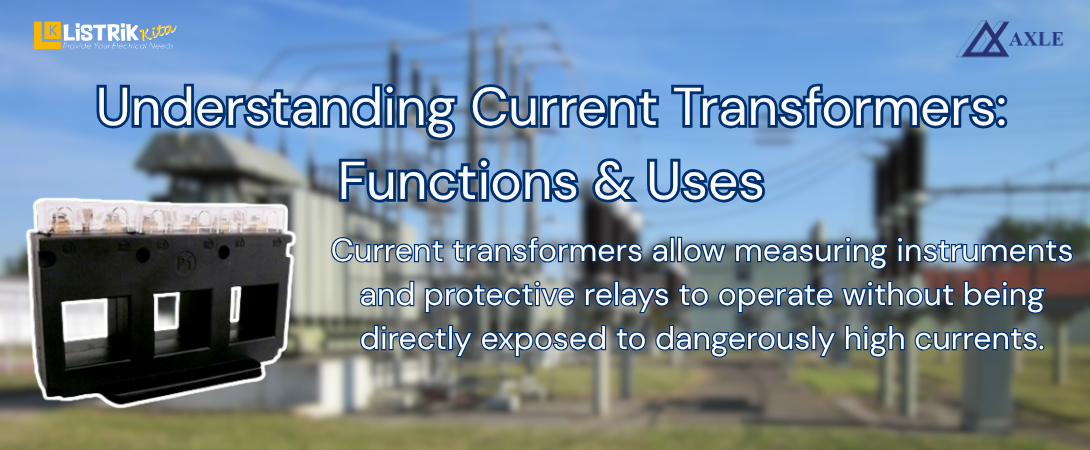
A Current Transformer is a type of transformer designed to convert high electrical current on the primary side into a smaller, safer current on the secondary side. CTs allow measuring instruments and protective relays to operate without being directly exposed to dangerously high currents.
Main Functions of a CT in Power Systems:
-
Measurement: CTs help instruments like ammeters or kWh meters to read current safely and accurately without handling high currents directly.
-
Protection: CTs are also used in protection systems (e.g., protective relays) to detect faults like short circuits or overloads and automatically trigger a circuit breaker when needed.
2. How Does a Current Transformer Work?
Magnetic Induction Principle in CTs
Current Transformers (CTs) work on the electromagnetic induction principle. When an electric current passes through the primary conductor, it creates a magnetic field that flows through the CT’s iron core, inducing a proportional current in the secondary winding.
Current Conversion Process: Primary to Secondary
Usually, the primary side has one or a few thick conductor turns, while the secondary side contains many more turns of thinner wire. The current ratio between the primary and secondary windings is determined by the number of turns in each winding. For example, a 100:5 CT will reduce 100A on the primary to 5A on the secondary side.
CT Working Diagram
In most cases, CTs are designed like a ring, where the primary conductor passes through the center (known as a window-type CT). The magnetic field generated by the current in the primary winding induces a corresponding current in the secondary coil surrounding the CT’s core.
3. Types of Current Transformers
Indoor vs. Outdoor CTs
-
Indoor CTs are designed for use in control panels or distribution boards. They are typically more compact and shielded against moisture and changes in temperature.
-
Outdoor CTs are built to withstand harsh environments—heat, rain, dust—and are commonly used in open substations.
Bushing CTs
These are installed in or around the bushing of high-voltage equipment like transformers or circuit breakers.
CT Types and Their Applications:
-
Window Type: The conductor passes through a hole in the center. Commonly used for permanent installations.
-
Cylinder Type: Shaped like a full cylinder; ideal where space is limited.
-
A Split-Core CT can be opened and installed without needing to shut off the power supply. Best suited for retrofits or live systems where downtime is not an option.
4. Applications and Benefits of Current Transformers
Energy Monitoring in Panels and Industrial Use
CTs are widely used in power distribution panels to measure energy consumption accurately, whether in industrial plants, commercial buildings, or utility systems.
Electrical Distribution Protection
By continuously measuring current, CTs help detect abnormal conditions like overcurrent or short circuits and allow the system to disconnect the faulty section before damage occurs.
Detecting Illegal Usage and Preventing Power Loss
CTs also help detect unusual current flows caused by electricity theft or leakage in electrical installations.
5. How to Choose and Install a Current Transformer
Choosing the Right Ampere Rating
Choose a CT according to the highest anticipated load current Ensure that the current ratio (e.g., 300:5) matches the needs of your measuring or protection devices.
Tips for Selecting the Right CT
-
Identify whether the CT is intended for measurement or protection purposes, as each requires different accuracy levels and burden (load) specifications.
-
Verify that it meets international standards such as IEC or ANSI.
-
Choose the right physical type (window, split-core, etc.) according to the installation conditions.
Safe Installation Practices
CTs should be installed by certified professionals. Install them in accessible areas that are dry and free from electromagnetic interference. If the CT secondary is not connected to a device, it should be grounded to prevent dangerously high voltages.
6. Maintenance and Testing of Current Transformers
Routine Maintenance Procedures
Regular visual inspections are important to detect any cracks, oil leaks (in outdoor CTs), or loose connections. Also, keep the CT surface clean from dust and moisture.
Current Transformers are crucial components in modern electrical systems, providing safe and accurate current measurement and essential protection. Their role in improving energy efficiency and system reliability makes them indispensable in many settings—from hospitals and factories to power plants.
Looking for a reliable CT for your facility? Explore a wide range of high-quality Current Transformers at Listrik Kita!
