


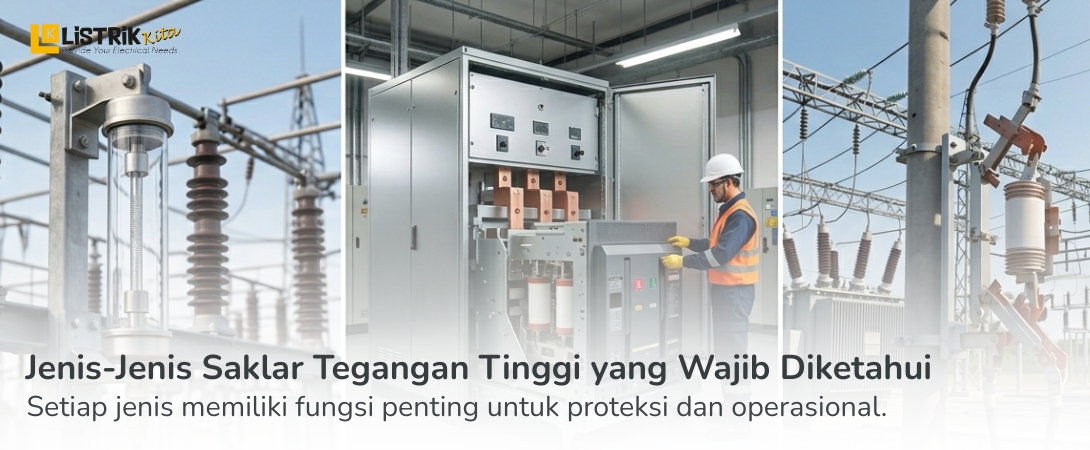
High voltage switches are important components in electrical power distribution systems. These devices are used to connect, disconnect, and isolate electrical current in medium and high voltage networks. In industrial facilities, substations, and commercial buildings, high voltage switches help maintain system safety and protect equipment from electrical faults.
Every type of switch is designed to serve a specific function. Some are designed to automatically disconnect power during electrical faults, while others are only used for isolation when there is no electrical load. Choosing the right switch is important to ensure the electrical system operates safely and reliably.
Fuse as Overcurrent Protection
A fuse is one of the most common protection devices used in electrical systems. It works by disconnecting the electrical circuit when the current exceeds a safe limit. During overloads or short circuits, the fuse element melts and stops the flow of electricity.
Fuses are widely used to protect cables, transformers, and electrical equipment from overheating and damage. They are known for their simple construction and fast response to short circuit conditions.
However, a fuse can only be used once. After it blows, it must be replaced with a new one before the system can operate again. Because of this, fuses are often used as additional protection in distribution panels and medium voltage systems.
Draw-Out Circuit Breaker as Automatic Fault Protection
A draw-out circuit breaker is a protective device designed to automatically interrupt electrical current during faults such as overloads or short circuits. Unlike fuses, circuit breakers can be reused after the fault has been resolved.
The draw-out mechanism allows the circuit breaker to be removed and reinstalled easily without dismantling the entire panel. This feature simplifies maintenance and replacement work while reducing downtime.
Draw-out circuit breakers are commonly used in industrial plants, commercial buildings, data centers, and manufacturing facilities that require reliable electrical protection. By automatically disconnecting faulty circuits, these devices help protect both operators and valuable electrical equipment.
Load Break Switch for Normal Load Switching
A load break switch is used to connect or disconnect electrical current under normal load conditions. This device is designed for switching operations during regular system operation, not for handling major fault currents like a circuit breaker.
In power distribution systems, load break switches are often used for network operation, maintenance, and distribution line transfer. They allow sections of the electrical network to be safely disconnected without affecting the stability of the entire system.
One advantage of load break switches is their relatively simple construction combined with reliable performance in medium voltage applications. Because of this, they are widely used in substations and industrial utility systems.
Disconnecting Switch for No Load Isolation
A disconnecting switch, also known as an isolator, is used to isolate specific parts of an electrical system when there is no load current. This device provides additional safety for technicians during inspection and maintenance work.
Unlike load break switches and circuit breakers, disconnecting switches are not intended to interrupt load current. They should only be operated after the electrical current has already been disconnected by another protective device.
In high voltage installations, disconnecting switches ensure that no electrical current remains in the equipment being serviced. This makes them an essential part of electrical safety procedures in substations and distribution panels.
Differences Between High Voltage Switches
Although all of these devices are used in electrical systems, fuse, draw-out circuit breaker, load break switch, and disconnecting switch each have different functions.
A fuse provides overcurrent protection by permanently disconnecting the circuit. A draw-out circuit breaker is designed to automatically cut off fault current and can be operated again after the issue is resolved. A load break switch is designed for switching during normal load conditions, while a disconnecting switch is only used for no load isolation.
Understanding these differences is important to ensure the electrical protection system works effectively and safely.
High voltage switches are essential for ensuring the safety and dependable operation of electrical power distribution systems. Devices such as fuse, draw-out circuit breaker, load break switch, and disconnecting switch are each built to handle specific protection and switching functions.
If you are looking for reliable draw-out circuit breakers, fuses, and load break switches for industrial and electrical distribution needs, you can find them at Listrik Kita with a complete range of trusted products.
