


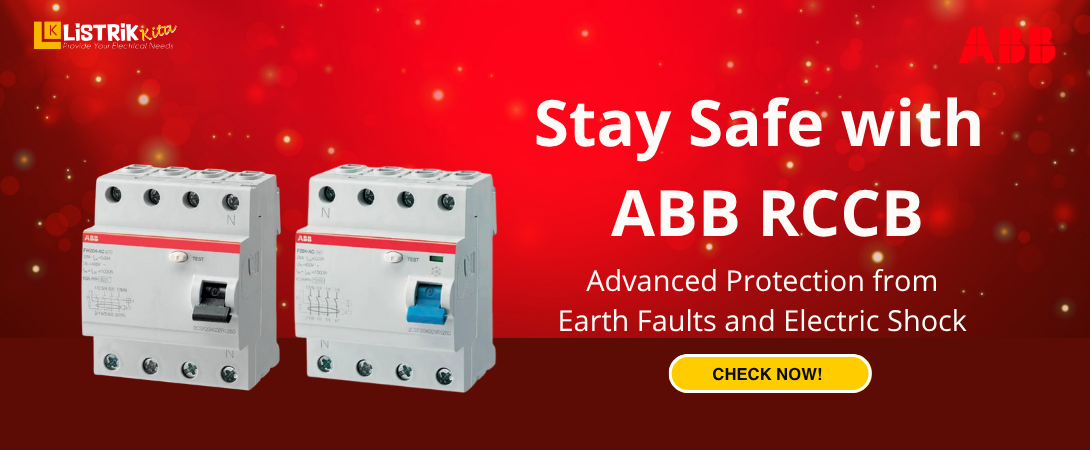
In today’s world, where homes and industries are filled with electrical devices, ensuring electrical safety has become more critical than ever. The RCCB (Residual Current Circuit Breaker) is a vital component in a reliable electrical protection system. ABB, a global leader in electrical technology, offers high-quality, innovative RCCB solutions. This article explores what an RCCB is, how it works, the advantages of ABB’s RCCB lineup, and how to choose and install the right one.
Definition and Working Process of RCCB
An RCCB is a protective device designed to detect leakage currents within an electrical circuit. When a current leak is detected—such as through a damaged cable or accidental contact with a live wire—an RCCB automatically cuts off the power supply. This quick action helps prevent serious injuries from electric shocks and reduces the risk of fire caused by short circuits.
RCCBs work by continuously monitoring the balance between the live (phase) and neutral currents in a circuit. If there is a difference—indicating that some current may be escaping to the ground—the RCCB disconnects the power supply immediately. This simple mechanism plays a crucial role in preventing hazardous electrical incidents.
Why RCCBs Are Essential for Homes and Industries
It is strongly advised to install an RCCB in electrical systems for both homes and industrial facilities. In homes, RCCBs provide added protection when using devices like washing machines, water heaters, or electric kitchen appliances. In industrial settings, they help safeguard workers and protect valuable equipment.
Without an RCCB, electrical installations are vulnerable to undetected current leaks. These issues could lead to fatal electric shocks or devastating fires. That’s why installing an RCCB is not just a precaution—it’s an investment in long-term safety.
Key Advantages of ABB RCCBs
Top Features of ABB RCCBs
ABB provides a broad selection of RCCBs featuring advanced technology and efficient design. Some key features include:
-
Compact design, ideal for space-saving installations in residential, commercial, or industrial panels
High sensitivity options, ranging from 30mA (for personal protection) to 500mA (to reduce fire risk) -
International certifications, including IEC/EN 61008-1 and IEC/EN 61008-2-1, ensuring safety and performance
-
Dual detection capability, for both AC and pulsed DC leakage—perfect for modern electronics like inverters or UPS systems
ABB’s Trusted Legacy in Circuit Protection
ABB has been at the forefront of circuit breaker innovation since 1923. Its longstanding reputation is built on a commitment to quality, innovation, and safety. Designed for durability and high performance, ABB products are engineered to withstand even the most demanding environments.
Types of ABB RCCBs and Where to Use Them
RCCB Types Available from ABB
ABB offers several RCCB types tailored for different needs:
-
Type AC: Detects standard alternating current (AC) leakage. Ideal for basic home setups.
-
Type A: Capable of detecting leakage currents in both AC and pulsed DC forms. Suitable for modern electronics like EV chargers, digital AC units, or inverters.
-
Other types: ABB also provides Type B and Type F for advanced industrial applications and variable-frequency equipment.
RCCB Applications Across Sectors
-
Residential: Provides peace of mind by protecting families from electric shock
-
Commercial buildings: Ensures the safety of staff and visitors from electrical leakage risks
-
Industrial environments: Prevents system failures and protects machinery from damage due to current leakage
Choosing and Installing the Right ABB RCCB
How to Choose the Right RCCB
When selecting an RCCB, consider the following:
-
Sensitivity level: Use 30mA for personal safety, and 100–300mA for fire protection, depending on the setting
-
RCCB type: Choose the RCCB type that corresponds to the characteristics of your electrical load. Type AC works for basic residential use, while Type A is better for electronics-heavy setups
-
Current rating: Ensure the RCCB can handle your system's electrical load to avoid unnecessary tripping
RCCB Installation Guide
While RCCBs are simple in design, it’s best to have them installed by a licensed electrician for maximum safety. Basic steps include:
-
Switch off the main power supply
-
Install the RCCB according to the wiring diagram
-
Connect the phase and neutral wires correctly
-
Test functionality using the built-in “TEST” button. A properly working RCCB will instantly cut off the power during a test.
Frequently Asked Questions About ABB RCCBs
How does an RCCB differ from an MCB?
An RCCB provides protection from electric shocks due to current leakage, whereas an MCB shields the system from overcurrent and short circuit problems.
How can I verify that my RCCB is functioning correctly?
Every month, remember to press the "TEST" button on the RCCB at least one time. If the RCCB is functioning, it will disconnect the power temporarily.
How long does an ABB RCCB last?
With proper use and installation, an ABB RCCB can last 10 to 15 years. Regular testing helps ensure peak performance.
Can ABB RCCBs be used in older electrical panels?
Yes, as long as the panel meets the RCCB’s specifications and wiring compatibility. Consult with a certified electrician for confirmation.
ABB RCCBs are a smart choice for anyone who values safety and reliability. With cutting-edge technology, international safety certifications, and a trusted global brand behind them, ABB RCCBs offer dependable protection for homes, offices, and industrial setups alike. You can get ABB RCCBs at Listrik Kita—your trusted partner for electrical solutions.
