


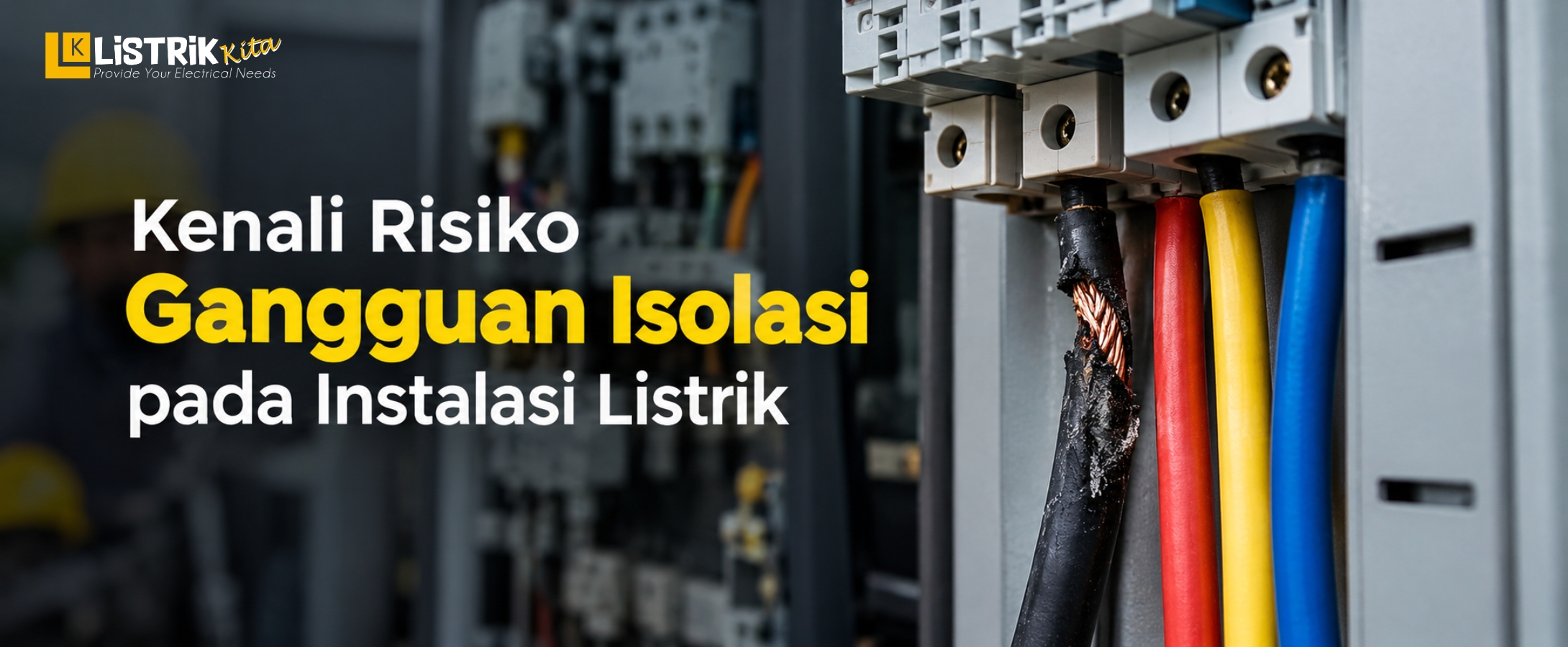
Insulation faults are one of the electrical conditions that should not be overlooked because they can create risks for both people and electrical equipment. Damaged or deteriorated insulation can allow electrical current to flow through an unintended path. To support safer electrical installations, Listrik Kita is an official Schneider Electric distributor providing original products with warranty.
How to Protect People and Equipment from Insulation Faults?
What Is an Insulation Fault in an Electrical Installation?
Insulation works as a protective layer that separates electrical conductors from parts that should not carry electricity. Over time, insulation can become damaged due to aging, excessive heat, moisture, friction, improper installation, or environmental conditions.
When insulation fails, part of the electrical current may flow through an unintended path. This condition is commonly associated with leakage current and can become dangerous if it is not detected and managed with the right protection system.
The Impact of Insulation Faults on Electrical Installations
An insulation fault is not only a cable problem. Leakage current can also increase the risk of electric shock, equipment damage, and fire.
For this reason, an electrical installation should have suitable protection devices that can help detect abnormal conditions and disconnect the electrical supply when a fault occurs.
Safety Risks Caused by Insulation Faults
Fire Risk Caused by Insulation Faults
Undetected leakage current can cause heating in certain parts of an electrical installation. If this condition continues and occurs near flammable materials, the risk of fire can increase.
Reducing this risk requires a combination of proper installation and suitable protection devices. Checking cables, connections, grounding, and leakage protection devices is an important part of maintaining electrical safety.
Risk of Electric Shock and Fatal Injury
One of the most serious risks caused by insulation faults is contact with a part that has an electrical voltage. Current passing through the human body can cause electric shock with different levels of severity and may even be fatal.
This is why human protection should be an important part of electrical installation planning, especially in areas where people may come into contact with equipment or installation components affected by leakage current.
Types of Protection for People and Equipment
Protection for People
Protection for people can generally be considered in two situations: direct contact and indirect contact.
Protection Against Direct Contact
Direct contact occurs when a person touches a part of an electrical installation that is energized, such as an exposed conductor or terminal.
Protection can include proper insulation, covers, enclosures, and installation designs that prevent direct access to energized parts. Leakage protection devices can also be part of the overall protection system to help reduce risks caused by abnormal electrical conditions.
Protection Against Indirect Contact
Indirect contact occurs when a person touches a metal part of electrical equipment that should normally not be energized but becomes live because of insulation failure.
For example, damaged insulation inside electrical equipment may cause leakage current to reach its metal enclosure. If someone touches the enclosure, the human body may become part of the current path to earth. Proper grounding and leakage protection can help provide protection in this type of situation.
Protection for Electrical Equipment
Protection Against Fire Risk
Protection systems are also needed to help reduce the risk of damage to electrical installations and equipment. Insulation faults that cause leakage current are among the conditions that should be detected as early as possible.
Suitable protection devices can help disconnect the circuit when a specific abnormal condition is detected. This can help stop the fault before it develops into a more serious problem.
Why Is Leakage Current Protection Important?
Leakage protection works by detecting an imbalance between the currents flowing through the conductors. This imbalance can indicate that some current is flowing through an unintended path.
Leakage protection does not replace the entire electrical safety system. Proper grounding, adequate insulation, correct installation, and suitable protection devices are still important for maintaining a safe electrical system.
Protection Devices That Can Be Used
RCBO for People and Installation Protection
RCBO stands for Residual Current Circuit Breaker with Overcurrent Protection. It combines residual current protection and overcurrent protection in a single device.
An RCBO can help protect against leakage current while also providing protection against overload and short-circuit conditions, depending on the device specifications. Because several protection functions are combined into one device, an RCBO can be a practical choice for circuits that require more comprehensive protection.
RCD or RCCB for Detecting Leakage Current
RCD or RCCB devices are designed to detect residual current or current flowing through an unintended path. When the detected condition reaches the device's operating limit, the protection system can disconnect the electrical supply.
RCCB and MCB have different primary functions. RCCB focuses on residual current protection, while MCB provides protection against conditions such as overload and short circuits.
MCB for Overcurrent Protection
MCB, or Miniature Circuit Breaker, protects electrical circuits against overcurrent conditions, including overload and short circuits. However, an MCB is not specifically designed to detect leakage current.
Therefore, when planning electrical protection, protection against leakage current and electric shock should be considered separately from standard overcurrent protection.
How to Choose the Right Protection for an Electrical Installation
Identify the Risks You Need to Protect Against
The protection device should be selected according to the needs of the installation. Consider whether the main protection requirement is for people, equipment, fire risk, overcurrent, short circuits, leakage current, or a combination of these risks.
Make Sure the Installation Has Proper Grounding
Grounding is an important part of electrical safety, particularly when dealing with faults involving electrical equipment. A proper grounding system provides a path for fault current and can support the operation of protection devices.
In addition to grounding, cables, connections, insulation, and protection devices should also be inspected regularly.
Insulation faults should not be taken lightly because they can increase the risk of electric shock, equipment damage, and fire. Effective protection requires a combination of proper installation, grounding, adequate insulation, and protection devices that match the electrical system.
If you are looking for original Schneider Electric RCBO products with warranty, you can purchase them through Listrik Kita. Choose the right Schneider Electric RCBO for your installation needs and help improve the safety of your electrical system.
