


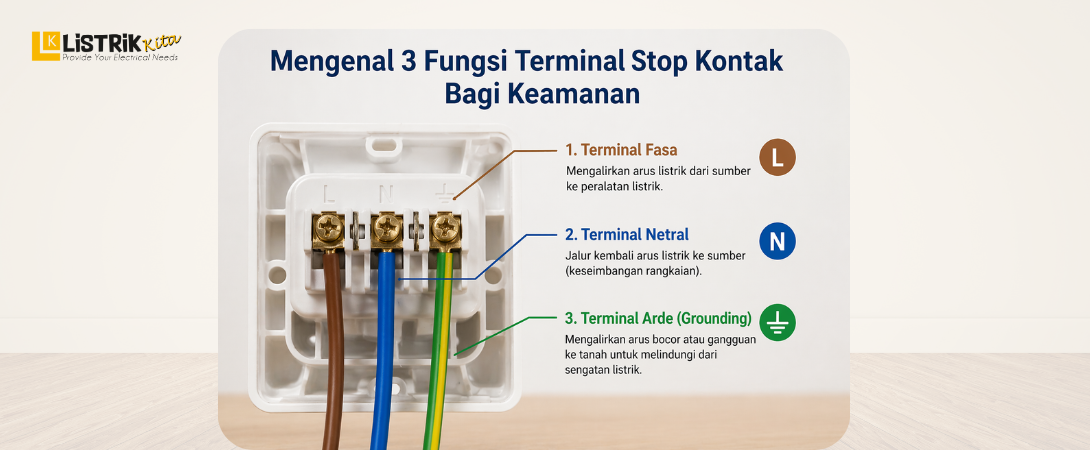
Have you ever looked closely at the power outlets in your home? For most people, a wall socket is just a place to plug in a TV or charge a phone. However, behind that plastic cover lies a system of terminals designed with precision to ensure electricity flows steadily and, most importantly, safely.
Understanding the function of each terminal is not just for electricians. As a homeowner, this basic knowledge is vital so you can spot early signs of trouble in your electrical installation. Let us break down the three main components found in every standard power outlet.
1. Phase Terminal: The Main Power Path
The phase terminal is the most active component of the three. In technical terms, it is often called the live or hot wire. Its primary role is to carry electrical voltage from the power source directly to your electronic devices.
Without the phase terminal, your devices will not receive power. Because it carries high voltage, this part is the most dangerous to touch without proper safety tools. In standard installations, the phase wire is usually colored black, brown, or gray. Inside the socket, this terminal is connected to the screw holding these specific wires. If you use a voltage tester pen, this is the terminal that will make the indicator light glow brightly.
2. Neutral Terminal: Completing the Circuit
Electricity cannot work with just one path. For current to flow and power up a device, it needs a closed circuit. This is where the neutral terminal comes in. If the phase wire brings the electricity in, the neutral terminal acts as the path for the current to return to its source.
Even though a healthy neutral terminal usually shows no voltage when tested with a pen, it still plays a vital role. A loose or broken neutral connection is often the reason why electronics fail to work or even suffer permanent damage due to unstable voltage. In many regions, the neutral terminal consistently uses a blue wire as a universal marker.
3. Ground Terminal (Arde): Your Last Line of Defense
While the phase and neutral terminals work to power your devices, the ground terminal exists to protect your life. Sometimes, irresponsible installers skip this component to save costs, even though grounding is the most crucial safety feature.
The ground terminal functions by diverting leaking electricity directly into the earth. Have you ever felt a small electric shock when touching the metal body of a refrigerator or washing machine? That is a sign of a current leak. If the grounding system is installed correctly, that leaking current will be sent straight to the ground through a yellow and green wire, preventing you from getting shocked. Grounding ensures that the exterior of your devices remains safe to touch.
Maintaining Home Installation Safety
All three terminals must be tightly and correctly connected. Loose connections on the phase or neutral terminals can cause overheating, which leads to melted plastic or even fires. Furthermore, always make sure you use power outlets with clear safety certifications.
Choosing high quality electrical equipment is not just about looks, it is an investment in long term safety. If you are building or renovating your home and need electrical materials that are guaranteed to be authentic and high quality, you can find a wide range of certified wall sockets at Listrik Kita. With products from top brands, Listrik Kita ensures every installation in your home works optimally and safely.
