


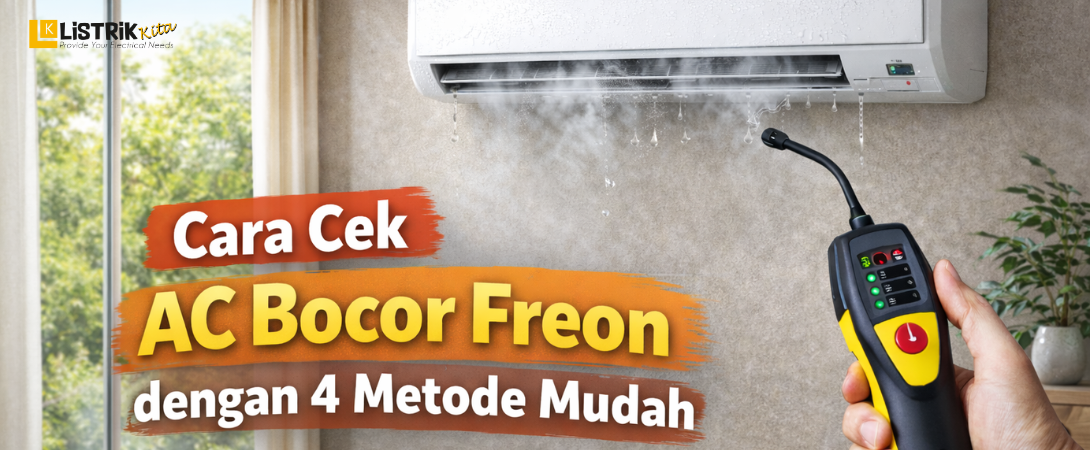
How to Check for AC Refrigerant Leak With 4 Easy Methods
Don't just recharge it! Find the leak first using soap bubbles, pressure checks, or electronic detectors. Complete troubleshooting guide.
When the air from your AC is not as cold as it used to be, or the compressor sounds like it’s running non-stop, the culprit is often a refrigerant leak. Refrigerant (often called Freon) is the cooling substance that is the heart of your AC system. It flows in a closed cycle, and if the amount decreases due to a leak, the AC's performance drops drastically: the air isn't cool enough, the unit works too hard, and most noticeably, the electricity bill shoots up. Being able to detect the early signs of a leak can save your wallet and prevent more serious damage to the compressor.
Here are four methods for checking for refrigerant leaks, from the simplest to those requiring tools, which can help you identify the problem before calling a technician.
1. Conduct a Preliminary Visual Inspection
Before touching any tools, start with your eyes. A visual inspection is the easiest, cheapest first step and can reveal obvious problems. Look for physical traces left by seeping refrigerant.
What Should You Check?
Focus on vulnerable spots that are common sources of leaks. On the indoor unit, pay attention to the area around the evaporator coil and the copper pipe connections. The presence of stains or an oily film is a major warning sign. Because refrigerant circulates along with the compressor's lubricating oil, a leak will carry that oil with it, leaving a shiny residue. On the outdoor unit, carefully examine the valve connections, capillary tube connectors, and the compressor body. Also look for signs of physical damage like cracks, corrosion (rust), or impact marks on the pipes and coil fins.
Besides direct physical signs, also observe indirect symptoms. If an excessive layer of ice or frost appears on the large pipe (suction line) leading to the indoor unit, this could be a sign of low refrigerant pressure due to a leak. Symptoms like the AC blowing air that isn't cold, or a compressor that runs continuously without pausing, further support this suspicion. Regular visual checks can help you catch problems early.
2. Use the Soapy Water Method (Bubble Detector)
If the visual inspection doesn't give a clear clue, the soap method is a classic, very effective, and affordable way to detect medium to large leaks. The principle is simple: refrigerant gas escaping from a gap will form bubbles when it meets a soapy solution.
Practical Checking Steps
Prepare the solution by mixing liquid dish soap with warm water in a spray bottle. For more stable and thick foam, you can buy ready-made AC leak detector foam at electronics or spare parts stores. Next, spray the solution or foam evenly and quite thickly onto the suspected areas: every pipe connection, service valve cap, flare nut, and hard-to-see coil areas.
Then, observe carefully. At the leaking point, you will see the appearance of consistent, growing air bubbles, just like when you blow soap bubbles. This is positive confirmation of a leak. Once found, mark the spot with a marker, then immediately clean the remaining soap foam from the AC components. This cleaning is important to prevent corrosion on the metal. This method is reliable, but for very small leaks (micro-leaks), bubbles may be difficult to see.
3. Check by Measuring Refrigerant Pressure
A more technical but very accurate method is to measure the system pressure using a Manifold Gauge. Refrigerant pressure that is far below the normal range is a strong indicator that refrigerant has been lost. This check usually requires basic knowledge of AC systems and is done at the outdoor unit.
The Pressure Measurement Process
First, make sure you have a Manifold Gauge Set consisting of a high-pressure gauge (red hose) and a low-pressure gauge (blue hose). Find the service ports on the outdoor unit (usually two: a smaller one for low pressure, a larger one for high pressure). Carefully connect the gauge hoses to the appropriate ports.
Turn on the AC in cooling mode at the lowest temperature and maximum fan speed. Let the system run for several minutes until it stabilizes. Read the numbers displayed on the gauge, especially on the low-pressure (blue) gauge. Compare the result with the standard pressure chart corresponding to the type of refrigerant (e.g., R32, R410A) and the current room temperature. As an illustrative example, if the standard pressure for a certain temperature should be around 65-70 PSI, but the reading is only 40-50 PSI, then a leak is very likely. Remember, interpreting these numbers requires understanding, and pressure measurement is a procedure best performed by a competent technician.
4. Accurate Detection with an Electronic Refrigerant Detector
To find very small or hidden leaks, an electronic refrigerant detector is the best choice. This tool is specifically designed to "sniff" the presence of refrigerant particles in the air with high sensitivity. Its practical shape allows for scanning in difficult areas.
How to Use a Refrigerant Detector
After reading the manual, turn on the detector and perform an initial calibration if needed. With the AC turned off, begin scanning slowly. Move the tool's sensor close to all connections, pipe bends, along the coil, and other potentially leaking components. When the detector senses an increased concentration of refrigerant, it will give a warning in the form of increasingly faster beeps or an indicator light. Move the sensor closer and farther away to pinpoint the strongest concentration location, which is the leak source. Mark that spot for repair.
Besides electronic detectors, there are also ultrasonic detectors that pick up the sound frequency of escaping refrigerant, suitable for noisy environments. Using this tool provides the most convincing results before undertaking repairs and recharging.
Next Steps After Finding a Leak
Whichever method you use and successfully find a leak point, the most important next step is to contact a certified AC technician. Repairing a leak isn't just about patching; it involves a process of recovering (evacuating) the remaining refrigerant, repairing or replacing components, vacuuming the system to remove air and moisture, and recharging the refrigerant with the exact type and amount. This process requires special tools and expertise to ensure the AC runs efficiently and safely again.
As a long-term preventive step, invest in the best quality AC from the start.
Visit Listrik Kita to find the best ACs with official warranties and the latest technology that suits your home's needs.
